
For most applicants, the second year Working Holiday visa (subclass 417) still requires 3 months of specified work, which the Department counts as a minimum of 88 calendar days, done while you held your first visa. That is the law today. What changed on 17 September 2026 is an announcement that second and third visas will move to a ballot.
Status as at 2 October 2026: the three and six month specified work requirements are law, and the Department counts them as 88 and 179 calendar days. The ballot for second and third visas was announced on 17 September 2026 and is not yet law. There is no instrument, no start date, and no published detail on how it would run.
If you are partway through farm work right now, that gap between an announcement and the law is the uncomfortable part. Here is what the rules say today, what the Minister actually said, and what nobody has published yet.
Second year working holiday visa requirements as at 2 October 2026
The Department’s second Working Holiday visa page says you must:
- “have previously entered Australia on a subclass 417 visa”
- “if in Australia, hold a substantive visa or your last substantive visa expired less than 28 days ago”
- “be 18 to 30 years old (or 35 years old for some countries)”
- “have completed 3 months of specified subclass 417 work”
- “not be accompanied by dependent children”
You also need a passport from an eligible country, and you apply on your own. The visa gives a 12 month stay. You can apply in or outside Australia, but “If you apply when you are in Australia, you must be in Australia when we grant your visa.”
The same page shows the cost as AUD1,000 and asks for proof of the work, such as “pay slips” and “Australian bank statements covering the period of declared specified work”. It also warns: “We might contact your employer(s) to check your work claims.”
The Work and Holiday visa (subclass 462) follows the same pattern, with a narrower list of work that counts.
What counts as specified work for a 417
Specified work is, almost always, the right industry in the right postcode. The Department’s specified work page for the 417 lists:
- “tourism and hospitality in Northern or Remote and Very Remote Australia, from 22 June 2021”
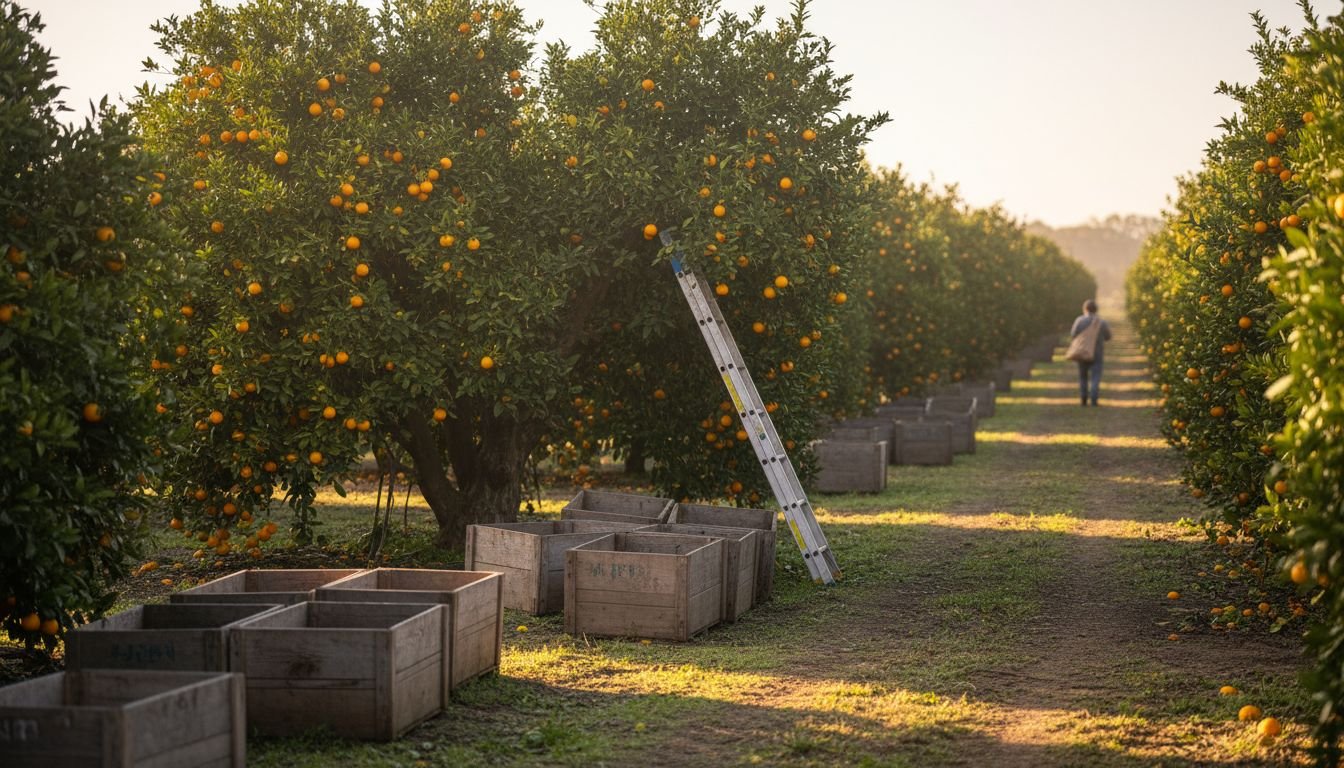
- “plant and animal cultivation in regional Australia”
- “fishing and pearling in regional Australia”
- “tree farming and felling in regional Australia”
- “mining in regional Australia”
- “construction in regional Australia”
- “bushfire recovery work in declared bushfire-affected areas carried out after 31 July 2019”
- “recovery work in flood, cyclone, or other severe weather-affected areas carried out after 31 December 2021”
- “critical COVID-19 work in the healthcare and medical sectors anywhere in Australia, after 31 January 2020”
Each area is defined by postcode tables on that page. How remote a place feels is irrelevant. Outside the critical COVID-19 category, if the postcode is not listed, the work does not count.
Two details catch people out. Pruning and trimming can count, but the Department says it “must be your primary employment task, and that general garden maintenance is not an eligible activity”. And secondary processing is excluded: “This includes winemaking, brewing and distillation, milling, manufacturing of small goods, and retail of dairy or butchery products”.
There is some give at the moment. The Department is “temporarily applying flexibility” so that “work which supports the ongoing operations of a specified industry (such as administrative and cleaning support services) in an eligible postcode may be accepted.” Temporary is the word to notice.
Specified work for 462 holders is narrower
The Department’s specified 462 work page uses the same counting rules but fewer places.
| Industry | Subclass 417 | Subclass 462 |
|---|---|---|
| Plant and animal cultivation | Regional Australia | Northern Australia and other specified areas of regional Australia |
| Fishing and pearling | Regional Australia | Northern Australia only |
| Tree farming and felling | Regional Australia | Northern Australia only |
| Construction | Regional Australia | Northern Australia and other specified areas of regional Australia |
| Mining | Regional Australia | Not on the 462 list |
| Tourism and hospitality | Northern or Remote and Very Remote Australia | Same |
| Bushfire and disaster recovery | Declared areas | Same |
If you are still working out which visa your passport gives you, our 417 vs 462 comparison guide covers the wider differences.
How the Department counts 88 days and six months
The 88 days figure is the Department’s own definition, on its specified work page:
‘3 months’ is taken to mean a period equivalent to the 3 shortest ‘calendar’ months of the year, that is, a minimum period of 88 calendar days, including weekends or equivalent rest days during your period of employment.
Six months, for a third visa, is “a minimum period of 179 calendar days”.
Calendar days are only half the test. You must also complete “the same number of normal work days or shifts as a full-time employee in that role and industry would normally work” in that period. Two days a week for three months falls short, so part-time work has to run proportionately longer.
The rules people most often get wrong:
- You can split the work: “You do not need to do your 3 or 6 months of specified work all in one go, or all with one employer.”
- You cannot double up: “You cannot count work carried out on one calendar day as more than one day of specified work.”
- Paid public holidays and paid sick days can count. Unpaid ones cannot, and neither can “any unpaid days where you did not work due to severe or seasonal weather”.
- “As a rule, you must have undertaken all your specified work while holding your previous WHM visa.”
The Department says to finish early, “as no exception will be made for failure to complete the required minimum period of specified work because of severe weather”, or for any other reason.
Third year working holiday visa: six months on your second visa
The Department’s third Working Holiday visa page requires that you “have previously held 2 subclass 417 visas in Australia” and “have undertaken 6 months of specified subclass 417 work”.
The six months must be done on the second visa, on or after 1 July 2019. One exception helps. If you applied for your second visa while your first was still in effect, and a bridging visa came into effect while it was processed, “you can count specified work carried out on this bridging visa towards eligibility for a third WHM visa”. Work on another kind of visa, such as a student visa, does not count.
The 462 works the same way: two previous 462 visas and six months of specified 462 work.
The announced ballot for second and third visas
On 17 September 2026, the Minister for Home Affairs, Tony Burke, used his National Press Club speech to say “we will be going to a ballot system for years two and three.” The work requirement stays:
So, to qualify for your second year you have to do 88 days in the regions. To qualify for your third year, you have to do six months. That won’t change. But what you will be qualifying for is a ballot.
He gave the limits with his own comparison:
The ballot for year two will be limited to 45,000. For reference, last year there were 57,000 people who qualified.
We’ll be seriously limiting year three down to a ballot system of 5,000. Now, last year there were 31,000 in this group.
On his figures, the year two ballot would hold 12,000 fewer places than the number he said qualified last year, and the year three ballot 26,000 fewer. Finishing the work would get you into the draw. It would not secure a visa.
What is not known about the ballot yet
The Government’s 17 September media release describes it as “Changing the Working Holiday Maker Program to introduce a ballot system for years two and three where there will be a regional work requirement in support of regional Australia.” That is an announcement, not a law.
As at 2 October 2026, no instrument implementing the ballot appears on the Federal Register of Legislation, and none of this has been published:
- a start date
- whether the 45,000 and 5,000 limits are per program year
- how registration and selection would work, and whether a fee would apply
- how places would be shared between 417 and 462 holders
- what happens to applications lodged before any start date
We will not guess. The detail will be in the instrument when it is made.
UK passport holders
UK passport holders are in a different position. The Department’s arrangements for UK passport holders say that from 1 July 2024, “UK passport holders can be granted up to three separate Working Holiday visas without having to meet any specified work requirements.” The age range for UK applicants has been “18 to 35 years inclusive” since 1 July 2023.
The Minister acknowledged this in his speech: “There’s not a regional requirement with respect to the United Kingdom”. He said UK processing would stay slow: “at the moment we are still in the case where we will be processing at the speed we’ve been processing the last few years for the UK working holiday maker applications.” On UK backpackers in Australia, he said: “It’s now just shy of 80,000”.
Neither the speech nor the media release says whether UK passport holders, who have no work requirement to meet, would go into the ballot.
Working holiday visa processing time
The Department’s working holiday visa pages now say: “we are normalising processing timeframes for most WHM visa applications. The average processing time is expected to be around three months.” The Minister said normal pace was being restored “for those ones that have the regional requirement to be able to get years two and three”, not for UK applications.
The Department’s global visa processing times guide measures recently finalised applications, so it reads differently. In figures updated on 29 September 2026, 50% of 417 applications were finalised in 2 days and 90% in 58 days. For the 462, it was 3 days and 44 days. The guide does not separate first, second and third visas, and it cautions: “offshore Working Holiday visa applications may take approximately three (3) months to be finalised in some cases.”
Either way, the Department’s advice is: “Do not book flights or make travel, work or study commitments until your visa has been granted.”
First Work and Holiday visas: the August pauses
The first-visa pauses were separate from the ballot and applied to the 462, which is the visa with country caps. When the Department’s caps page was updated on 19 August 2026, its table (archived copy) showed first 462 lodgements paused for 23 of the 29 partner countries. China, India and Vietnam were on ballots, and Indonesia was marked for a ballot whose registrations had not opened. Only San Marino and Türkiye were open.
The page explains that a pause is not only about running out of places: “Lodgements may also be paused to support the Government’s migration settings while ensuring the program operates sustainably.”
Which countries are paused as at 2 October 2026
Most have reopened. The status of country caps page, last updated at 11:12 am on 2 October 2026, shows:
- Paused: Brazil, Mongolia and Papua New Guinea
- Ballot: China, India and Vietnam, with Indonesia marked for a ballot whose registrations are “expected to open later in 2026”
- Open: the other 22 partner countries
The Department asks you to “allow up to 48 hours” for status changes to show. The page also confirms: “There are no caps for second or third Work and Holiday visas.” The announced ballot would add a new limit, if it becomes law.
What has changed since 1 July 2026
Two changes on the Department’s working holiday maker news page took effect on 1 July 2026, and a third has been announced.
Age 35 for four countries. “From 1 July 2026, passport holders from Cyprus, Finland, Germany, and Republic of Korea passport holders are eligible to apply for a Working Holiday (subclass 417) visa if they are 18 to 35 years of age (inclusive).”
Uruguay. “From 1 July 2026, up to 1,500 first Work and Holiday (subclass 462) visas are available each program year to eligible passport holders from Uruguay.”
Indonesia ballot, announced. “Under an agreement between Australia and Indonesia, a visa ballot will be introduced for Indonesian passport holders applying for their first Work and Holiday (subclass 462) visa. Ballot registrations are expected to open later in 2026.”
Second and third visas now cost $1,000
Since 1 July 2026, the Home Affairs Legislation Amendment (2026 Measures No. 1) Regulations 2026 have set the base application charge at $840 for a first 417 or 462 and $1,000 “for any other applicant”, with a lower $690 rate for 462 applicants holding a Pacific passport. The explanatory statement calls it an “Increase of $330 to second and third application VACs”, applied instead of the general 25% rise. That is exact for the 417. The 462 started from a lower base, so its rise was slightly larger (see the FAQ below).
The charge is paid when you lodge. Refunds are limited to the circumstances in regulation 2.12F of the Migration Regulations, such as an application “made because of a mistake made by Immigration”.
If you are doing your 88 days now
Nothing announced so far changes the work itself. The Minister’s words were “That won’t change.” What we cannot tell you is how a ballot would treat someone who finished the work before it started, because no rules have been published. A few points hold whatever happens.
Keep proof as you go. Payslips, bank statements showing the wages arriving, any piece rate agreement, and employer references. Rebuilding this a year later is much harder.
Check the postcode and the task before you start. A farm job that turns out to be garden maintenance, or a winery job that is really winemaking, may not count.
Build in a buffer. Unpaid rain days do not count.
Watch the six month employer limit. The Department notes that “Mandatory visa condition 8547 limits you to a maximum period of 6 months’ work with any one employer”, unless an exemption or permission applies.
Do not plan on switching to a student visa onshore. Assistant Minister Julian Hill’s release of 2 October 2026 confirms: “Most temporary visa holders, including Working Holiday Maker and Skills in Demand visa holders, will no longer be able to apply for a Student visa in Australia.” Our guide to student visa changes from October 2026 explains the new rules.
If your history is untidy, say work split across a bridging visa, volunteer recovery work, or postcodes you are unsure about, check it properly before you lodge, not after.
Frequently asked questions
Can I get a second year work holiday visa in Australia?
You may be eligible if you have held a first Working Holiday (subclass 417) visa in Australia and completed 3 months of specified 417 work on it, which the Department counts as at least 88 calendar days of full-time equivalent work. UK passport holders applying with their UK passport on or after 1 July 2024 do not need the specified work.
Is the working holiday visa ballot in place yet?
Not for second and third visas. That ballot was announced on 17 September 2026 with limits of 45,000 for year two and 5,000 for year three. As at 2 October 2026 there is no instrument and no start date. A separate ballot already applies to first Work and Holiday visas for China, India and Vietnam passport holders.
What counts as specified work in Australia?
Work in listed industries in listed postcodes. For the 417 that includes cultivation, fishing and pearling, tree farming, mining and construction in regional Australia, tourism and hospitality in Northern or Remote and Very Remote Australia, and recovery work in declared disaster areas. The 462 list is narrower.
How do you prove your 88 days?
The Department lists evidence such as pay slips, Australian bank statements covering the work period, piece rate agreements, payment summaries, tax returns and employer references. It may contact your employers to check.
How much is a 3rd year Working Holiday visa?
From 1 July 2026, the base application charge for a second or third 417 or 462 is $1,000 for most applicants. Under the Migration Regulations as in force from 1 June 2026, the charge was $670 for a 417 and $650 for a 462. A first visa is now $840 for most applicants.
How long does a 2nd year WHV take?
The Department says the average for most working holiday visas “is expected to be around three months”. Its processing times guide does not separate second visas from first and third.
A realistic next step
If you are partway through your 88 days, specified work that meets the Department’s definition still counts under today’s law, so the useful thing now is making sure every day of it can be proved. If you are weighing a second or third year against a longer term pathway, our team advises on employer sponsored visas, and you can speak to our team before lodging.
About the author: Tina Nematian is the Principal Lawyer at One Planet Migration Law. She is an Australian Legal Practitioner and a Registered Migration Agent (MARN), and has guided clients through partner, skilled, employer-sponsored, student, and humanitarian visa applications across Australia.
This article is general information only and does not constitute legal or migration advice. Visa rules change frequently and outcomes depend on individual circumstances. Speak with a registered migration lawyer or agent before making any application. Figures were current as of October 2026; always check immi.homeaffairs.gov.au before lodging.