
Administrative Review Tribunal (ART) Visa Appeals in 2026: Step-by-Step Process, Time Limits and Costs
If your visa has been refused or cancelled, your deadline to challenge that decision is short, the form is technical, and the consequences of missing the date are usually permanent. This article walks through the ART visa appeal process as it stands in May 2026, including current fees, time limits, hearing format and what happens if the Tribunal affirms the refusal.
The reviewable decisions covered here are made by the Department of Home Affairs. The Tribunal that reviews them is no longer called the AAT.
The ART replaced the AAT on 14 October 2024
The Administrative Review Tribunal (ART) is the federal body that conducts merits review of Commonwealth decisions, including most migration and protection visa decisions. It was established by the Administrative Review Tribunal Act 2024{:target=”_blank” rel=”noopener noreferrer”} and commenced on 14 October 2024, replacing the Administrative Appeals Tribunal (AAT).
Applications that were pending at the AAT on that date transferred automatically. Applicants did not need to re-lodge anything. The Attorney-General’s Department guidance on the new system{:target=”_blank” rel=”noopener noreferrer”} sets out the structural changes in detail.
For a fuller background on why the change happened and how the new Tribunal is structured, see our earlier post introducing the Administrative Review Tribunal. This article focuses on what the new Tribunal means in practice for someone holding a refusal letter today.
The ART has eight divisions. Migration cases sit in the Migration jurisdictional area. Protection visa reviews are conducted under the Protection jurisdictional area. A new Guidance and Appeals Panel has been added to address systemic issues and material errors in Tribunal decisions, although migration and protection decisions cannot themselves be referred to the Panel.
Which migration decisions you can take to the ART
The Tribunal reviews most refusals and cancellations of:
- Partner and family visas (Subclass 820/801, 309/100, 300, 870, 600 in many cases)
- Skilled visas where the applicant is in Australia
- Employer-sponsored visas (Subclass 482 SID, 186 ENS, 494)
- Student and graduate visas
- Bridging visa cancellations and refusals
- Sponsorship decisions (refusal or bar of a business sponsor)
- Protection visa refusals and cancellations
- Some character cancellation and refusal decisions under section 501
Who can apply depends on the visa type. For most onshore visa refusals, the visa applicant is the review applicant. For offshore visa refusals, the sponsor (or person in Australia who would benefit from the visa) is typically the review applicant. For sponsorship decisions, the business or proposed sponsor lodges the application.
Not every decision is reviewable. Refusals based on adverse information given by ASIO, decisions made personally by the Minister under section 501A or 501BA, and most non-citizen decisions made offshore where no sponsor exists in Australia cannot go to the ART. If you are unsure whether your decision is reviewable, the refusal letter from Home Affairs will say so, and our team at One Planet Migration Law can confirm before any deadline runs.
For a separate angle on cancellation specifically, our note on Ministerial visa cancellation powers under section 501BA explains where the ART has no role.
Time limits to lodge an ART application, and why they are unforgiving
The single most important rule is this. The deadline runs from the day after notification of the original decision, the days are calendar days unless stated otherwise, and the Tribunal cannot extend the deadline for most migration categories.
Time limits are prescribed in regulation 4.10 of the Migration Regulations 1994{:target=”_blank” rel=”noopener noreferrer”}. The most common categories at May 2026 are:
| Category | Time limit |
|---|---|
| Most onshore visa refusals (s 338(2) or (7A) decisions) | 21 calendar days |
| Sponsorship decisions and some bridging visa categories | 28 calendar days |
| Offshore visa refusals (sponsor reviews) | 70 calendar days |
| Character cancellation revocation refusal in detention (s 501CA) and automatic character cancellation for prisoners (s 501(3A)) | 9 calendar days |
| Bridging visa refusal or cancellation in immigration detention (s 338(4)) | 2 working days |
The decision letter from Home Affairs will state which time limit applies to your case. Read it twice. Then mark it on a calendar.
One detail catches people out. If your letter was sent by post, the law deems notification to have occurred a set number of working days after the letter was dispatched, not the day you actually read it. If your letter was sent electronically through an ImmiAccount, notification is usually taken to be the day the email was sent. Always work from the deeming date, not your reading date.
A separate point. The 21-day limit is the one we see most often in onshore partner, student and skilled visa refusals. Many guides describe a general “28-day rule” because that was the figure in older summaries and applies to certain categories. In 2026 the position is split, so the right answer depends on the subclass and where the applicant was when the decision was made. If in doubt, the decision letter is the source of truth.
What an ART migration appeal costs in 2026
The standard fee for a review of a reviewable migration decision (other than a protection visa) is $3,580, current from 1 July 2025. This is the figure published on the ART fees page{:target=”_blank” rel=”noopener noreferrer”} as at May 2026. Fees are indexed annually on 1 July to the Consumer Price Index, so expect a small increase from 1 July 2026.
Three things to know about the fee:
- You pay it on lodgement. The Tribunal will not commence the review until the fee is paid, and the application can be dismissed if the fee is not paid within six weeks of lodgement.
- 50% is refunded on a favourable outcome. If the ART sets aside the decision, substitutes a new decision, or remits the matter to Home Affairs, you receive half the fee back.
- A 50% reduction applies on financial hardship grounds. That brings the upfront fee to $1,790. You apply for the reduction at the time of lodgement and the Tribunal decides on the basis of supporting evidence.
Protection visa reviews work differently. There is no fee on lodgement, but if the review is unsuccessful, a post-decision fee of $2,203 is payable.
These are Tribunal fees only. Professional fees for legal representation, evidence preparation and submission drafting are separate. For an overview of what private legal costs typically look like across appeal types, see our visa refusal appeals service page.
Step-by-step: what an ART migration appeal actually looks like
The official process is set out on the ART immigration and citizenship page{:target=”_blank” rel=”noopener noreferrer”}. The lived version usually runs like this:
- Lodge online. Most applications go through the ART online portal. You attach the decision record, your identity documents, and pay the fee. Lodging the application stops removal action in most cases (though not all character and detention cases).
- Receive acknowledgement. Within days the Tribunal issues an acknowledgement letter with your case number. This is also the moment Home Affairs is notified to send the case file to the Tribunal.
- Bridging visa updates. If you held a Bridging Visa A (BVA), it generally continues with the same conditions while the Tribunal reviews. If your substantive visa had already expired and you have no other lawful basis to stay, the Department typically grants a Bridging Visa E (BVE) so you remain lawful. For a refresher on bridging visa categories, our 2026 guide to bridging visas covers this in detail.
- Departmental file released. The Tribunal sends you the Department’s file (sometimes called the “T documents”) plus any internal notes the case officer relied on. This is the evidentiary foundation for everything that follows.
- Submissions and evidence. You file a written submission explaining why the decision was wrong, and any new evidence that addresses the case officer’s reasons for refusal. Most refusals are decided on the evidence that was before the case officer plus the new evidence you file at this stage.
- Hearing scheduled. Most migration matters are listed for an oral hearing 6 to 18 months after lodgement, depending on division and backlog. Some categories are now decided “on the papers” without a hearing under recent reforms.
- Hearing day. A single Tribunal member conducts the hearing. We expand on what to expect in the next section.
- Decision. The Tribunal usually reserves its decision and writes reasons. Decisions are typically delivered between two weeks and six months after the hearing.
Hearing day: what to expect
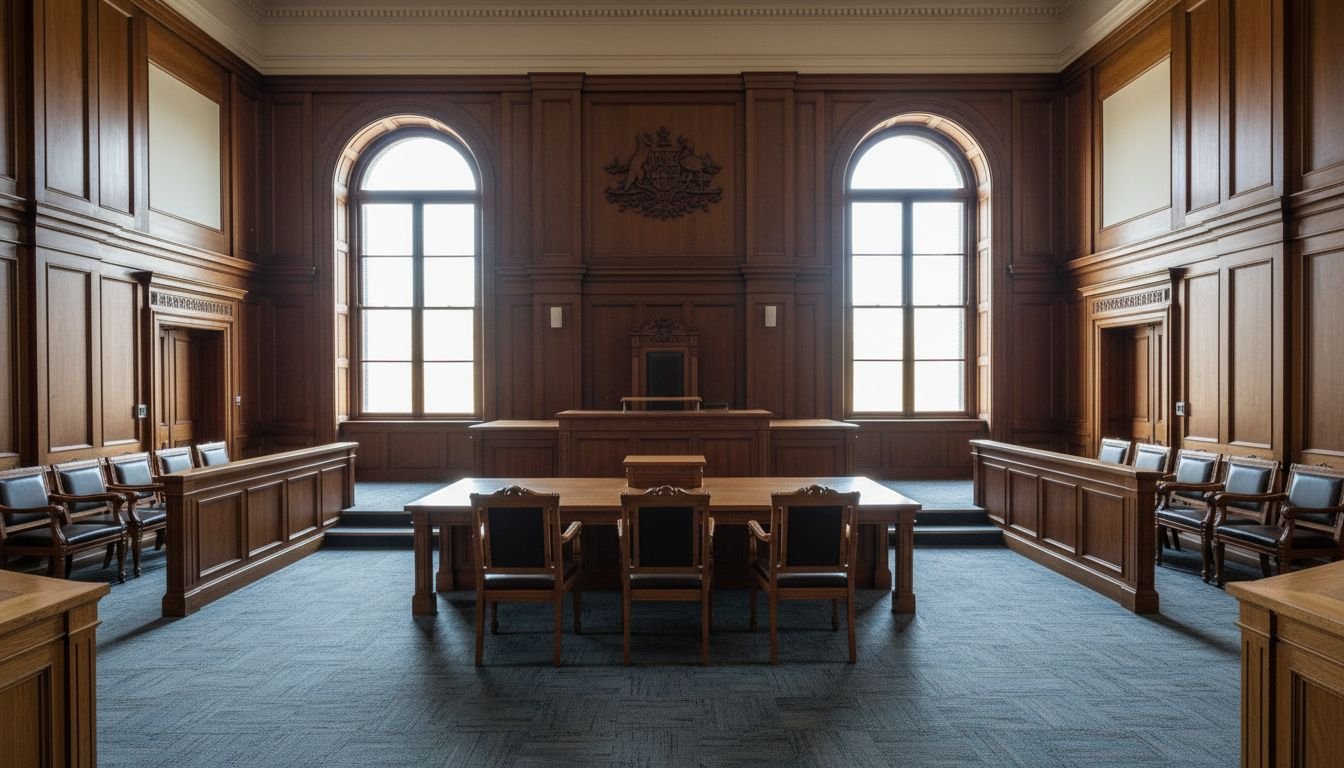
A migration hearing at the ART is not a courtroom trial. There is no jury. The Tribunal member sits at one end of a desk, with you, your representative and an interpreter (if one is required) at the other. The member asks questions, you answer, your representative can clarify, and at the end you make brief closing submissions.
Three things often surprise first-time applicants.
Most migration hearings are open to the public. The hearing room is technically available for any member of the public to sit in. In practice that is rare, but a family member or friend can attend to support you. The exception is protection visa hearings, which are always held in private to protect the applicant.
The role of a lawyer is to assist, not advocate in the way a barrister would in court. Your representative can explain documents, draw the member’s attention to evidence, make submissions on law, and clarify your answers. They cannot answer questions on your behalf. You are the witness to your own case.
The member can decide on the day, or reserve. Some matters are concluded with an oral decision at the end of the hearing. Most are reserved so the member can consider all the evidence and write full reasons.
If you would like a sense of how lawyer involvement at the Tribunal compares to other appeal pathways, our team at One Planet Migration Law walks clients through hearing preparation as part of our tribunal appeal service.
The three possible outcomes (and what each one really means)
The Tribunal has three primary options when reviewing a migration decision.
Affirm. The original refusal stands. The Tribunal agrees with Home Affairs. Your next options are judicial review at the Federal Circuit and Family Court, or a request for ministerial intervention.
Set aside and substitute. The Tribunal disagrees with the original refusal and substitutes its own decision. Where the law allows, that decision can be a grant of the visa. In some categories the Tribunal sets aside the refusal but cannot grant the visa itself, in which case the matter is remitted (see below).
Set aside and remit with directions. The Tribunal accepts the visa criteria you were refused on, and sends the application back to Home Affairs with directions to continue processing the application on the basis that those criteria are met. The Department then completes other checks (health, character, security) before granting.
If the Tribunal sets aside or remits, half of your application fee is refunded.
If the ART affirms the refusal: judicial review or ministerial intervention
A Tribunal decision is not necessarily the end of the road, but the next steps are narrower and more difficult.
Judicial review at the Federal Circuit and Family Court of Australia (Division 2). You can apply within 35 days of the date of the ART decision for judicial review. The court does not re-hear the merits. It looks only for jurisdictional error: a mistake of law, a failure to follow the correct procedure, a finding made without evidence, or a denial of procedural fairness. The court’s migration overview{:target=”_blank” rel=”noopener noreferrer”} sets out the process. Filing fees are separate to ART fees, and reduced fees are available on financial hardship grounds.
Ministerial intervention under section 351 or 417 of the Migration Act. This is a request to the Minister to substitute a more favourable decision in the public interest. It is not a right. The Minister has no obligation to consider the request, let alone grant it. It is best framed as a last resort where there are genuinely exceptional or compassionate circumstances. We outline the realistic expectations on our ministerial intervention page and in our existing post on whether to consider ministerial intervention after an ART refusal.
These two pathways can run in parallel in some circumstances. They cannot generally be used as a substitute for the other. If judicial review is available, the Minister will usually decline to consider an intervention request until court proceedings are exhausted.
Frequently asked questions
Can I work while waiting for my ART hearing?
It depends on the bridging visa you hold during the review period. A Bridging Visa A with full work rights continues those rights during the review. A Bridging Visa E typically carries a “no work” or restricted-work condition unless you successfully apply for those restrictions to be lifted on financial hardship grounds. Always check the conditions on your specific bridging visa grant notice.
Do I need a lawyer at the ART?
The Tribunal is designed to be accessible to self-represented applicants, and many people do represent themselves. That said, the success rate of represented applicants in well-prepared cases is materially higher in our experience, and the consequences of a final refusal (separation, loss of visa pathway, sometimes removal) make this one of the higher-stakes decisions in migration law. If you can afford representation, this is the stage of the process where it tends to make the biggest difference.
What happens to my bridging visa during the appeal?
Lodging an ART application does not change your bridging visa automatically. If you held a Bridging Visa A on the day of refusal, that visa generally continues for the duration of the review. If your substantive visa had already ceased and you had no bridging visa in place, the Department will typically grant a Bridging Visa E so you remain lawful while the Tribunal considers the case. Work and travel rights vary by category.
Will the public see my case?
For most migration matters, the answer is technically yes. ART migration hearings are open to the public, although in practice it is uncommon for unrelated members of the public to attend. Protection visa hearings are always held in private. The Tribunal also has the power to make confidentiality orders in specific cases involving sensitive information.
Can the ART change the law, or just review my decision?
The Tribunal can only apply the law as it stands. It cannot change visa criteria or migration policy. What it can do is reach a different conclusion on the facts, correct an error in how the law was applied, or accept new evidence that was not before the original case officer. If your refusal is based on the law itself being unfavourable, the Tribunal is unlikely to be the right forum. Policy advocacy or ministerial intervention may be more appropriate.
What to do today if you have a refusal letter
Three steps, in order.
- Find your deadline. The decision letter from Home Affairs tells you the time limit and the deemed notification date. Calculate the last day you can lodge. Add a five-day buffer in your own mind.
- Decide whether you will represent yourself or engage a lawyer. If you intend to engage a lawyer, do it now. Preparation time matters.
- Lodge before the deadline, fee included. Even a thin application lodged on time is recoverable. A late application almost never is.
Tribunal appeals are the part of migration law where careful preparation makes the largest difference. If you would like a senior lawyer to look at your refusal letter and explain the realistic options, book a consultation with our team before your deadline runs.
—
About the author: Tina Nematian, Principal Lawyer at One Planet Migration Law, is an Australian Legal Practitioner and a Registered Migration Agent. She has represented clients at the AAT and the Administrative Review Tribunal across partner, skilled, employer-sponsored, student and humanitarian matters.
Fees, time limits and processing arrangements in this article were current at 21 May 2026 and are taken from art.gov.au, legislation.gov.au and fcfcoa.gov.au. Fees are indexed annually on 1 July. Always confirm the current figures on the official source before lodging.
This article is general information only and does not constitute legal or migration advice. Visa rules change frequently and outcomes depend on individual circumstances. Speak with a registered migration lawyer or agent before making any application.