
 ChatGPT
 Claude
 Perplexity
 Google AI
 Copilot
 Grok
GrokChoosing an immigration lawyer in Brisbane in 2026 comes down to three things: are they actually qualified, can they handle your specific visa pathway, and is the fee structure honest. Most people get the first two right and then trip on the third.
Brisbane has become one of the busiest cities in Australia for new arrivals. Greater Brisbane added roughly 58,200 residents in 2024-25, a 2.1% jump, with overseas migration contributing close to 34,000 of that growth, according to the Australian Bureau of Statistics regional population release{:target=”_blank” rel=”noopener noreferrer”}. Skilled workers, students, partners of Queenslanders and employer-sponsored professionals are arriving every week. So is the volume of refusals, sponsor compliance notices and tribunal appeals.
This guide walks through who can legally help you, what fee ranges to expect by visa type, the questions worth asking before you sign anything, and the red flags that should make you keep looking.
Why Brisbane is its own market for migration work
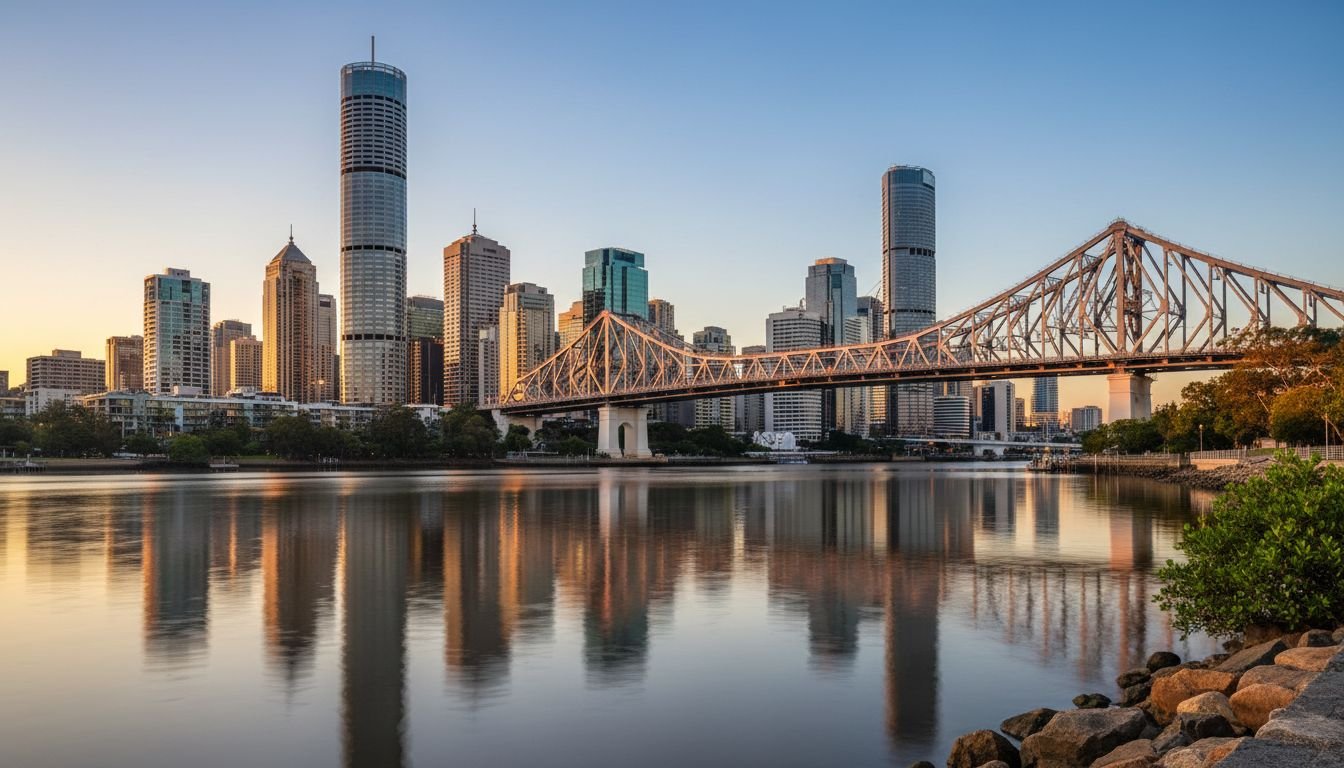
Brisbane is the capital of Queensland and the third-largest city in Australia, with a population of around 2.8 million. It sits on its own immigration rhythm: Queensland’s state nomination program, Migration Queensland, allocated 1,850 places to the Subclass 190 (Skilled Nominated) and 750 places to the Subclass 491 (Skilled Work Regional) for 2025-26, with separate occupation lists and Registration of Interest cycles, as set out on the Migration Queensland nomination page{:target=”_blank” rel=”noopener noreferrer”}.
What that means in practice. A skilled applicant in Brisbane is often weighing a Queensland 190 against a 491 regional pathway in Cairns or Toowoomba, while also keeping a federal Subclass 189 in mind. The lawyer you choose should be comfortable across all three. We cover the broader picture in our overview of state nomination by state.
Brisbane also has a heavier-than-average concentration of student and graduate visa work, employer-sponsored applications in healthcare, construction and engineering, and partner visa applications where one party is an Australian citizen working in southeast Queensland.
Immigration lawyer vs migration agent: which do you actually need
Both can lodge a visa application. Both can give immigration advice. But the legal status and the powers are different.
A Registered Migration Agent (RMA) is a person who has passed the qualifying coursework, holds professional indemnity insurance, and is registered with the Office of the Migration Agents Registration Authority. Their identifier is a Migration Agent Registration Number (MARN). It is a seven-digit number and you can look anyone up on the public Register of Migration Agents{:target=”_blank” rel=”noopener noreferrer”}.
An immigration lawyer is an Australian Legal Practitioner who holds a current practising certificate from a State or Territory bar admission authority (in Queensland, that is the Queensland Law Society). Since the Migration Amendment (Regulation of Migration Agents) Act 2020{:target=”_blank” rel=”noopener noreferrer”} commenced on 22 March 2021, lawyers with a current practising certificate are no longer required to also hold a MARN to provide immigration assistance. They are regulated under their state legal profession framework instead.
Where the two roles diverge:
- Court work. Only an admitted lawyer can appear in the Federal Circuit and Family Court or the Federal Court for judicial review. A migration agent cannot.
- Legal professional privilege. Communications with a lawyer giving legal advice attract privilege. Migration-agent-only advice does not attract the same protection.
- Related work. Family law issues that often overlap with partner visas (separation, custody arrangements, family violence orders) need a lawyer.
Where they overlap: lodging the visa, preparing evidence, attending the Administrative Review Tribunal for merits review. Both can do this. For straightforward applications with no complications, a good RMA may be all you need. For refusals, appeals, character cancellations and anything that might end up in court, you should engage a lawyer.
We unpack this further in our piece on visa refusal appeals at the ART if you have already received a negative decision.
What an immigration lawyer actually does for your case
It is not just paperwork. A good immigration lawyer will:
- Assess your eligibility against the current Migration Regulations and any Legislative Instruments in force, not last year’s settings
- Identify the right visa subclass for your circumstances, including any pathway alternatives
- Prepare and lodge the application through ImmiAccount with the supporting evidence formatted for the assessing case officer
- Manage requests for further information from the Department of Home Affairs
- Brief you honestly on weaknesses in your file and how to mitigate them
- Where things go wrong, lodge a merits review at the ART within the strict time limits or, if needed, judicial review in the Federal Circuit and Family Court
What a lawyer should not do: promise outcomes, hide adverse facts from the Department, or push a higher-fee strategy when a simpler one would work. If you are in Brisbane and considering remote engagement, that should also include video consultations and a clear scope-of-works document before any payment.
Fee ranges in 2026 by visa type
Lawyer fees are not regulated. They vary by the lawyer’s experience, the case complexity, and whether the firm is a generalist law practice or a specialist migration firm. The following ranges reflect what we see in the Australian market in 2026 for the visa types most commonly worked on in Brisbane. They are professional fees only and do not include the Department of Home Affairs application charges.
- Partner visa (Subclass 820/801 or 309/100): AUD $4,500 to $8,500 professional fees, depending on relationship complexity and evidence preparation required. The Department’s own application charge for the Subclass 820 sits at approximately AUD $9,365 for the 2025-26 financial year, as listed on the Department of Home Affairs visa pricing estimator{:target=”_blank” rel=”noopener noreferrer”}.
- Employer-sponsored Subclass 482 SID (Core Skills stream): AUD $4,000 to $7,000 professional fees on the employee side, plus the sponsor and nomination work on the employer side. The Department’s primary application charge for the 482 is approximately AUD $3,210, and the Core Skills Income Threshold sits at AUD $76,515 for 2025-26 (rising to AUD $79,423 from 1 July 2026), per the Skills in Demand visa page on immi.gov.au{:target=”_blank” rel=”noopener noreferrer”}.
- Subclass 186 ENS Direct Entry: AUD $5,500 to $10,000 professional fees, plus the Department’s $4,910 application charge and $540 nomination fee.
- ART tribunal appeal of a visa refusal: AUD $6,000 to $15,000 professional fees, plus the tribunal filing fee of $3,580 for a standard migration review, which is published on the Administrative Review Tribunal fees page{:target=”_blank” rel=”noopener noreferrer”}. A 50% refund is available where the review is successful, or financial hardship reductions are possible.
- Judicial review in the Federal Circuit and Family Court: AUD $8,000 to $25,000 depending on whether the case proceeds to a full hearing.
For employer-side work, our employer-sponsored visas service page sets out the typical engagement scope. For family applications, the same applies on our partner and family migration page.
A note on fixed fees. Most reputable firms offer fixed-fee arrangements on standard, predictable matters (a partner visa with strong evidence, a 482 nomination for an accredited sponsor). They should switch to hourly billing or staged fees on contested matters. Anyone offering a flat fixed fee on a tribunal appeal without seeing the refusal decision and the Department’s reasons should make you pause.
7 questions to ask before you engage anyone
Use this checklist on the consultation call. Any qualified lawyer or agent should answer all seven without hesitation.
- Are you a Registered Migration Agent or an Australian Legal Practitioner, and can I see your MARN or practising certificate number? Verify it against the Register of Migration Agents{:target=”_blank” rel=”noopener noreferrer”} or with the Queensland Law Society. A lawyer should give you their admission number and the year they were admitted.
- Who will actually work on my file day to day? It might be a junior solicitor, a paralegal, or the principal. All can be fine. You just want to know.
- What is your written scope of work, and what is excluded? Anything not in the scope, like a tribunal appeal if the application is refused, will be a separate engagement and fee.
- What is the realistic timeline for my visa subclass based on current immi.gov.au processing data? A good answer will reference the Department’s published global processing time bands, not give you a guess.
- How do you handle bad news from the Department, like a request for more information or a Notice of Intention to Consider Refusal? You want to hear a process, not a promise.
- What is your refund and termination policy if I decide to discontinue the engagement? This should be in the costs agreement before you sign.
- Have you handled a case like mine in the last 12 months? Specific is better than generic. Ask for the visa subclass, not client names.
Red flags to walk away from
Some warning signs come up again and again. None of them are subtle.
- No MARN and no practising certificate. It is unlawful to give immigration assistance for a fee in Australia without one or the other. The Department’s guidance on getting help with your application{:target=”_blank” rel=”noopener noreferrer”} is direct on this.
- A guaranteed outcome. No lawyer or agent can promise a visa grant. Anyone who tells you otherwise is either lying or about to break the regulations.
- A flat fixed fee on a contested tribunal appeal before they have read the refusal decision. Appeals are evidence-driven. The work depends on what is in the file.
- Payment requested only by cash or to a personal bank account. A regulated practice will issue a costs agreement and a trust account or office account invoice.
- No costs agreement at all. Lawyers are required by their state legal profession Acts to issue one. RMAs are required by the Code of Conduct.
- A practitioner who tells you to provide false documents or to overstate your relationship evidence. This is the fastest way to a Public Interest Criterion 4020 finding and a three-year exclusion bar.
- Pressure to sign on the first call, “before the policy changes next week”. Migration policy does change, sometimes quickly. But a real lawyer will explain the timing, not weaponise it.
What our Brisbane-based clients usually come to us with
We work with Brisbane-based clients remotely and on a visiting basis from our primary offices in Sydney and Melbourne. The patterns we see are consistent.
Skilled professionals weighing a Queensland 190 against a 491 regional pathway, and unsure how to time the Registration of Interest. Employer sponsors in healthcare and construction navigating the post-December 2024 Skills in Demand framework and the Core Skills Occupation List. Partners of Queenslanders working through Subclass 820 onshore applications and the relationship evidence required. And, increasingly, applicants whose visa has been refused and who have a tight statutory window to lodge at the ART. For most onshore visa refusals that window is 21 days, with shorter periods (down to 7 or 9 days) for character cancellations and certain detention decisions, as set out on the ART migration and refugee review page{:target=”_blank” rel=”noopener noreferrer”}.
For appeal work specifically, see our tribunal appeal service for the scope of what is included.
At One Planet Migration Law, every matter is opened with a written scope, a costs agreement, and a named lawyer responsible for the file.
Frequently asked questions
Can a Brisbane immigration lawyer represent me if their office is in Sydney or Melbourne?
Yes. Australian Legal Practitioners with a practising certificate from any state can act for clients across Australia under mutual recognition. Most visa work is done electronically through ImmiAccount, and consultations can run by video. The physical office location of the lawyer rarely affects the application itself.
How do I check if a migration agent is registered?
Search the Register of Migration Agents on the MARA portal{:target=”_blank” rel=”noopener noreferrer”}. Enter the agent’s name or MARN. The register shows whether the registration is current, suspended or cancelled.
What is the difference between a lawyer’s fee and the visa application fee?
The lawyer’s fee is the professional fee for the legal work. The visa application fee, sometimes called the Visa Application Charge (VAC), is paid to the Department of Home Affairs when the application is lodged. The two are entirely separate, and the VAC is published per visa subclass on the Department’s visa pricing estimator{:target=”_blank” rel=”noopener noreferrer”}.
Do I need to fly to Sydney or Melbourne for a consultation?
In most cases, no. Initial consultations and file work are typically handled by video and email. Some hearings or interviews may require in-person attendance, but that is the exception, not the rule.
What happens if my visa is refused and I miss the appeal deadline?
If the time limit to apply to the ART has passed, the tribunal cannot extend it. Your options narrow significantly: ministerial intervention under sections 351 or 417 of the Migration Act may be available in limited circumstances, or judicial review in the Federal Circuit and Family Court if there is a jurisdictional error in the decision. Both are difficult pathways. The statutory window (commonly 21 days, and shorter for some decisions) is the first deadline that determines what you can do at all.
The realistic next step
If you have a visa decision deadline, a refusal in front of you, or a sponsorship obligation you are uncertain about, the next sensible move is a paid initial consultation with a qualified practitioner who will read your file, confirm what is in scope, and give you a written quote before any further work begins.
Book a consultation with our migration lawyers to discuss your circumstances.
—
About the author: Tina Nematian is the Principal Lawyer at One Planet Migration Law. She is admitted as an Australian Legal Practitioner, and has guided clients through partner, skilled, employer-sponsored, student, and humanitarian visa applications across Australia.
—
Disclaimer: This article is general information only and does not constitute legal or migration advice. Visa rules change frequently and outcomes depend on individual circumstances. Speak with a registered migration lawyer or agent before making any application. Fee figures and processing times referenced in this article were current as of 21 May 2026 and should be verified against the cited immi.homeaffairs.gov.au, mara.gov.au and art.gov.au pages before relying on them.